Omega-3 polyunsaturated fatty acids (n-3 PUFAs) are essential nutrients involved in cardiovascular, inflammatory, and neurological functions. Alpha-linolenic acid (ALA, 18:3n-3) is the plant-derived precursor of the long-chain n-3 PUFAs, eicosapentaenoic acid (EPA) and docosahexaenoic acid (DHA), but its endogenous conversion remains limited. The impact of combining ALA with preformed EPA and DHA on the bioavailability and metabolism of omega-3s remains poorly understood. This study evaluated the effects of different dietary combinations of ALA, EPA, and DHA in rats.
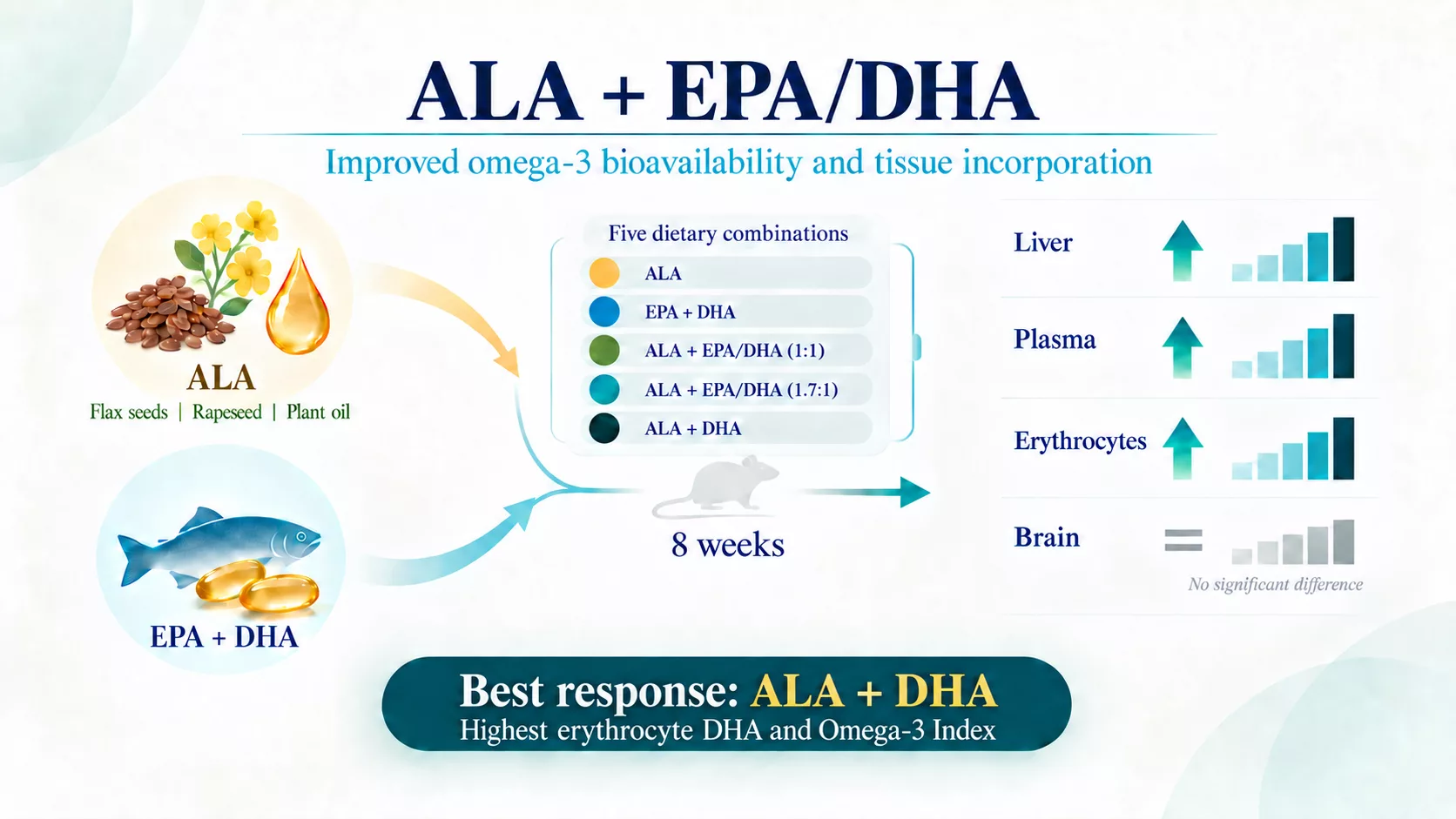
Forty male Wistar rats were randomly assigned to five dietary groups (n = 8 per group) and fed experimental diets for 8 weeks: ALA alone, EPA+DHA without ALA, ALA+EPA/DHA (1:1 ratio), ALA+EPA/DHA with a predominance of EPA (1.7:1), or ALA+DHA without EPA. Fatty acid composition was measured in the liver, plasma, erythrocytes, and brain using gas chromatography with flame ionization detection (GC-FID). Hepatic lipid fractions were also characterized.
Diets combining ALA with long-chain n-3 PUFAs produced the highest liver omega-3 levels (6.8 to 7.9% of total fatty acids), compared with ALA alone (5.3%) or EPA+DHA alone (3.4%). Liver concentrations of EPA and DHA increased markedly when ALA was combined with long-chain n-3 PUFAs. The ALA+DHA and balanced ALA+EPA/DHA diets resulted in the greatest accumulation of DHA in the liver and plasma. In erythrocytes, the combined diets increased total omega-3 content by approximately 30% and improved the Omega-3 Index compared to single-source diets. The ALA+DHA diet produced the highest erythrocyte DHA levels and Omega-3 Index, while EPA-rich diets reduced DHA accumulation. No significant differences were observed between the groups regarding DHA levels in the brain.
The combination of ALA with preformed EPA and DHA improves the bioavailability of omega-3 fatty acids and their incorporation into tissues more effectively than when they are administered separately. Among the strategies studied, the ALA + DHA combination—either alone or combined with EPA in balanced proportions—appears to be the most effective at improving overall omega-3 status in rats.