
Mapping the multifunctionality of powders through a balanced fundamental and applied assessment: a Pickering (or similar) approach
The 6th edition of the Cosm'Innov Conference will take place on May 20 and 21, 2026, in Orléans.
Cécile Joseph, a Formulation Development Engineer at ITERG, will present a poster titled "Mapping powder polyfunctionality through balanced fundamental and applied evaluation: a Pickering(-like) perspective."
SUMMARY
This study presents a comprehensive strategy for evaluating the potential of various plant-based powders and byproducts as functional ingredients.
The goal is to evaluate and compare their performance, mechanisms of action, and functional potential as emulsifiers, thickeners, colorants, and/or sensory modifiers, while minimizing the number of formulation trials required.
The goal is to develop functional prototypes that highlight the most promising ingredient-property combinations identified during the process, and to compare them with relevant market benchmarks.
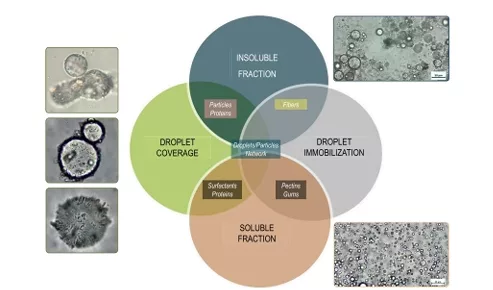
The study is based on an integrated, multi-step methodology —including a decision tree, formulation mapping, and prototypes—that can be used independently, in combination, or adapted as needed.
Within the decision tree, key criteria are defined to identify candidates worthy of further investigation, establish initial usage requirements, and select key properties of interest.
Formulation mapping then explores the behavior of ingredients by varying two parameters at a time (for example, identifying limited coalescence in the case of true Pickering systems) and helps determine the appropriate conditions for use (w/w %, pH, process parameters, etc.), in comparison with a carefully selected control ingredient.
Finally, the powders are incorporated, under the specified conditions, into simplified prototype products that are representative of future applications.
Characterization methods—including microscopy, rheology, stability testing, and sensory evaluations—are tailored to each stage to ensure a robust interpretation of the results.
The results confirm that many powders can contribute to the stabilization of formulated products through several mechanisms, including interactions related to the soluble fraction, the adsorption of insoluble particles, or the formation of a structuring network within the continuous phase. However, achieving realistic—and sometimes multifunctional—performance requires careful consideration of the conditions under which the powders are used, their intrinsic nature, and their production history—factors that enrich this evaluation strategy while also complicating its interpretation and communication.
These results underscore the need for a nuanced, multi-criteria assessment in order to fully capture the functional potential of plant-based powders.
Overall, this strategy enables efficient screening, clearer positioning, and safer use of plant-based and upcycled powders in cosmetic formulations. By combining structured evaluation with targeted prototyping, it supports the development of high-performance and more sustainable ingredient solutions, while accelerating innovation cycles for formulators and ingredient developers.
Contact: c.joseph@iterg.com